Preparing a Car for Painting
- Washing: Start by preparing buckets of water and car shampoo. Use a soft sponge or a car wash mitt to remove dirt from the surface. Pay attention to hard-to-reach spots such as panel gaps and wash them thoroughly. After washing, rinse the car well with clean water.
- Removing old paint: If there is old paint on the surface, use medium-grit sandpaper (for example P180–P220) to carefully remove it. Work gently so you do not damage the metal or the surface. Then move on to finer sanding (for example P320–P400) for a smooth surface.
- Filling: If the body has dents, scratches or other imperfections, use automotive body filler. Apply it to the problem areas and level it carefully. Once the filler has dried, use finer sandpaper to smooth the surface.
- Priming: Once the surface is level and smooth, apply automotive primer. Primer prepares the surface for paint, improves adhesion and protects the metal from corrosion. Let the primer dry according to the manufacturer’s instructions.
- Sanding the primer: After the primer has dried, use finer sandpaper (for example P400–P600) to gently sand the primed surface. This creates a smoother base for painting.
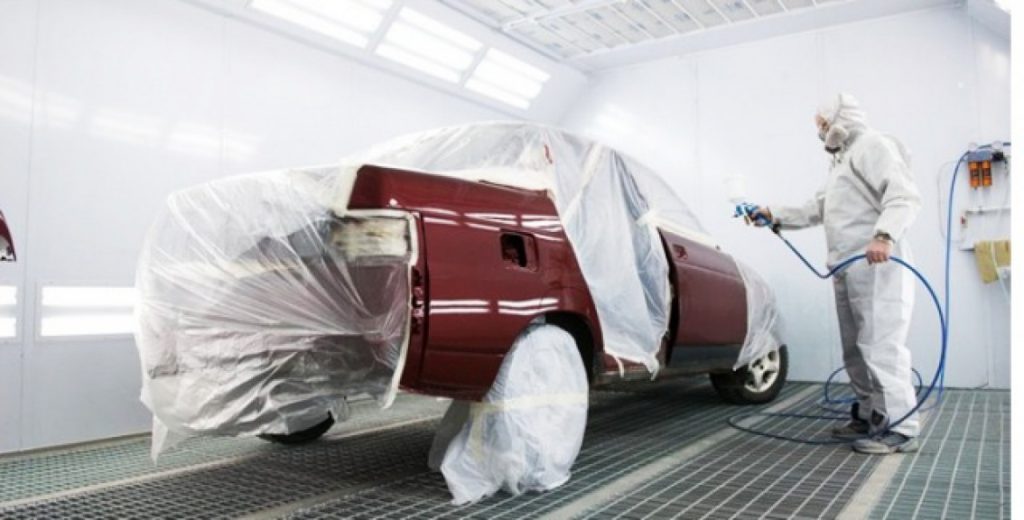
- Masking: Protect the parts of the car that will not be painted with masking tape and film. This is important to avoid overspray landing where it is not wanted.
- Dust removal: Before you start applying paint, thoroughly clean the surface of dust and fine particles. This can be done with a jet of compressed air or a soft microfibre cloth.
- Applying paint: Use automotive paint that matches your car. Apply the paint in several thin coats, spreading it evenly over the surface. Make sure there are no spatters or streaks. Before applying each next coat, let the previous one dry as instructed.
- Applying clear coat: After the paint, apply several coats of automotive clear coat for protection and gloss. Clear coat should also be applied in thin layers with drying time in between.
- Drying: After the final coat of clear, let the whole finish dry completely. This usually takes several days, but the exact time depends on the ambient conditions and the type of paint and clear coat used.
- Polishing: Once drying is complete, you can polish the car. Use a car polish or wax to add extra shine and protect the surface.
Each of these steps requires care and attention to detail. If you have no experience, it is best to turn to professional technicians to guarantee a high-quality job.
Car painting in Almaty and body repair in Almaty