How a Car Is Repainted
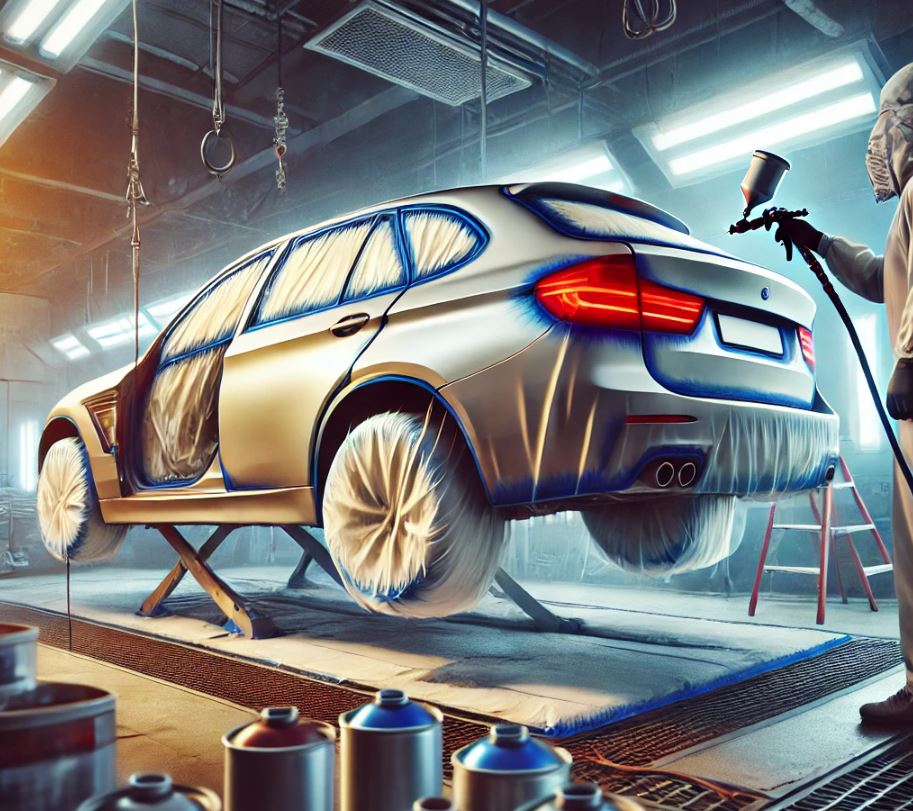
Repainting a car is a complex, multi-step process that requires professional skill and attention to detail. Here is the general step-by-step plan for repainting a car:
- Preparing the car:
- Washing: The car must be washed thoroughly to remove all dirt, grease, oil and other contaminants. This is essential for the paint to bond properly to the surface.
- Removing parts: Take off every part that will not be painted, such as headlights, door handles, mirrors and trim.
- Sanding: Sand the surface to level it and remove old paint, scratches and dents. Use different sandpaper grits depending on the condition of the surface.
- Masking: Protect every part of the car that should not be painted with masking tape and film.
- Priming:
- Apply a dedicated automotive primer over the entire car. Primer helps the paint bond properly and ensures even coverage.
- Applying the paint:
- Choose the paint colour you want and mix it according to the manufacturer’s instructions.
- Apply the paint to the car in even coats, making sure each coat dries before the next one goes on. The number of coats varies with the colour and type of paint.
- Drying:
- Let the paint dry completely, following the instructions on the packaging and allowing for ambient conditions. This usually takes several hours.
- Sanding and polishing:
- Once the paint has dried, sand it to remove any unevenness and defects, then polish it to give the paint its gloss and smoothness.
- Finishing and reassembly:
- Remove the masking materials and refit the parts you took off.
- Inspection and testing:
- Carry out a final inspection to make sure the work has been done to a high standard and there are no defects.
Repainting a car requires professional skill and the right equipment. If you have no experience with automotive painting, it is best to turn to a professional workshop to be sure of a quality result.