How Thick Should the Paint on a Car Be?
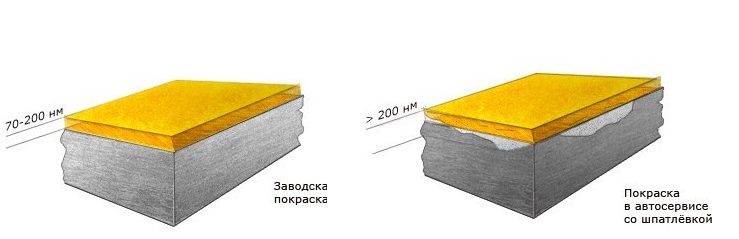
Paint thickness on a car matters a great deal, as it affects the appearance, the body’s protection against corrosion and how long the paintwork lasts. During vehicle production, special attention is paid to the factory paint job to ensure the correct paint thickness.
The generally accepted paint thickness is 100-150 microns (µm), or 0.1-0.15 mm. It should be noted, however, that exact thickness recommendations may vary depending on the car manufacturer and the type of paint used. Some manufacturers also have their own unique standards that they follow at their plants.
Paint thickness is measured with a special instrument known as a paint thickness gauge, which accurately measures the paint thickness at different points on the car’s body. This is necessary for quality control and for checking compliance with the manufacturer’s standards.
Paint can be applied to a car in several stages:
- Base coat: This is the first layer, which gives the car its color and shade. The base coat is usually around 20-40 µm thick.
- Protective clear coat (the bonding or protective layer): After the base coat, a protective layer of clear coat is applied, which gives the car its gloss and protects the paint from external influences. The clear coat is typically around 40-70 µm thick.
So the total paint thickness on a car comes to about 100-150 µm (base coat and clear coat combined). Deviations from this range can lead to problems with appearance, resistance to damage or corrosion.
If you have questions or need your car repainted, it is best to turn to professionals at a body shop who have the experience and equipment to apply paint correctly, following all of the manufacturer’s recommendations.