Car Body Polishing in Almaty
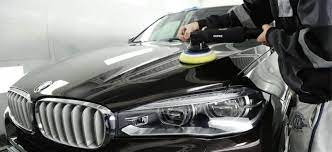
For many car owners, a car is not merely a means of transport but a beloved creation. Keeping the car in proper technical condition is routine for every driver, yet not everyone pays attention to how it looks.
Over time, small imperfections begin to show on the body surface: chips, cracks, scratches and scuffs; the original shine fades, and the once-bright paint gradually dulls and loses its lustre.
A car’s paintwork deteriorates as time goes by: air currents penetrate it, while precipitation, sand and dust take their toll from outside. In the cold season, de-icing chemicals are added to the mix, and sharp temperature swings further damage the coating.
Bird droppings should not be forgotten either: within a week they can seriously damage the coating, which then has to be cleaned and repainted. The most reliable way to return a car to its original look is body polishing.
Types of car body polishing
Restorative polishing
This polishing method can bring back lost shine, paint saturation and colour brightness. Exposure to the elements (sun, precipitation, wind) and regular washing lead to tiny defects on the body surface, darkening of the clear coat and loss of paint gloss.
On close inspection of a car body, you can find many marks: minor scratches, chips and traces of careless washing.
The most effective way to deal with these defects is abrasive polishing of the car body. The restorative polishing procedure consists of several stages:
Abrasive polishing: removal of the top layer of the coating, 2 microns thick.
Removal of minor body defects such as scuffs and scratches.
Removal of chemical film.
Levelling out paint marks.
Removal of clouded clear coat.
Restorative body polishing is carried out over the entire surface of the car and can take from 2 to 7 hours, depending on the complexity of the work and the initial condition of the vehicle.
If required, individual areas such as a door, the bonnet or the roof can also be polished, skipping the abrasive stage.
In Kazan, colour saturation and paint brightness can be restored, and shine and original lustre returned to the car body, at the «Kuzovnoy – Kazan» body repair centre.
The cost of body polishing at the auto centre is low, and once you see the results of the procedure you will be pleased with what you spent.
Protective polishing is a method in which special polymer compounds based on silicone and anti-scratch agents are applied to the surface of the car body.
The main difference between protective and restorative polishing is that in protective polishing the top layer of the paintwork is not removed with abrasives but treated with polishing pastes. Body defects are filled with silicone, making them almost invisible.
As the polymer compound is applied to the car, a reaction takes place at the molecular level, creating an ultra-thin protective film. It prevents dust and dirt from building up on the body surface and repels moisture.
Advantages of protective polishing:
Easier car washing.
Protection of the body from dirt, moisture and the weather.
Protection from de-icing chemicals in winter.
Protection from ultraviolet rays.
After protective polishing, the body acquires a deep shine and a protective film on the paintwork that is invisible to others. The wax-based polymer coating has excellent water-repellent properties.
To enhance the effect of protective polishing, compounds containing Teflon can be used, which remain resistant to chemicals and temperature swings.
It is recommended to have this type of polishing done at least twice a year; the whole process takes about three hours.
Soft polishing
After protective polishing, the next step is soft polishing of the car body. This process is aimed at removing the previous coating and giving the car a radiant shine. Soft polishing is recommended about once a month, and the whole procedure takes about two hours.
Choosing between hand polishing and professional polishing
When polishing, bear in mind that special premises with a controlled temperature and a filtration system are required to provide the right conditions. Only large specialised workshops, such as the «car painting in Almaty» body repair centre, can provide everything that is needed.
Before polishing begins, the right materials have to be selected in advance to suit the specific needs of the car’s paintwork, since every case requires its own solution. It is important to follow the stages of the procedure strictly, especially with abrasive polishing: you start with the most active and aggressive compounds and then move on to softer, finishing ones.
Ordinary washers at ordinary car washes usually lack sufficient knowledge of the technological process and are not familiar with all the stages of proper body polishing. Such work results in streaks and holograms at best, or the need to completely repaint the panel at worst.
One of the most important aspects of car polishing is the thickness of the clear coat, which is very easy to damage. The thickness and hardness of the clear coat vary depending on the make, model, year and country of manufacture. To avoid damaging this layer, you need to know the exact rotation settings and speed of the polishing machine, which is only possible with professional equipment found in specialised centres but not at random car washes or in garages.
Although professional body polishing may cost more than doing it yourself or at an ordinary car wash, the mistakes you might make can lead to significant expense down the line.
High-quality body polishing done to a professional standard (for example, at the «Car painting in Almaty» body repair centre) is as effective as the factory finish. For the best results, stick to the following schedule:
Once a year: restorative polishing.
Once every six months: protective polishing.
Once a month: soft polishing.
Following this simple programme will keep you admiring your car for many years after it leaves the factory.
Don’t skimp on this procedure: the cost of car body polishing in Kazan is low, and carrying out all the stages regularly will help protect your car from the harmful effects of the environment.